“There was no playbook for building a quality child care program when I entered the early learning field,” recalls Linda Smith, director of the Child Care Trust, a catalyst for designing the future of child care. As a young woman in the early 1970s, she studied child development at the University of Montana and spent a summer working in a tribal Head Start center during the early days of Head Start. Then an unexpected opportunity arose. “My husband took a job at the Northern Cheyenne Reservation, and the tribe asked me to set up a child care program since I was the only person in many miles who had a degree related to the early childhood field. I was only in my twenties and new to the field,” she admits. “Still, the tribe trusted me, so I decided to figure out how to set a program up.”
Linda drew on her brief experience at Head Start as she set up a program at the Northern Cheyenne Reservation and went on to launch two more programs for the tribe. “One of the concepts I brought from Head Start was the importance of having parents participate in the program,” Linda says. “We expected them to come to parent-teacher meetings and take parenting classes at the center to better understand their children’s development and growth.” These were requirements that made a big impact on both the parents and the children, Linda points out. “I saw positive changes in the children as the parents became more engaged.”
Still, workforce issues remained a challenge, as she explains. “We were hiring people with no background or training in early learning, something we’re still doing in this country,” Linda says. And now, as then, it led to high turnover rates. “At one of the programs I ran, we received a grant from the Office of Indian Education, and we had to have an outside evaluation of the program. During the first year of the program, the evaluator said that ‘you have a higher turnover rate than a McDonald’s’ and we did,” Linda admits. So, she resolved to turn the program around. “By the second year of the program, the turnover rate went to zero because we gave the staff high-quality training.” And Linda brought this lesson to a new role at the Department of Defense (DOD) where she faced even greater roadblocks to building a quality program.
“My husband and I moved to Phoenix, Arizona, and I found a job at a child care center on Williams Air Force Base,” Linda recalls. And she was shocked by what she saw on the first day that she walked into the center. “The program was in an old wooden building, and 30 to 40 children were in one room with no toys. There was a table, a chair in which a so-called ‘caregiver’ sat, and a TV mounted on the wall,” Linda says. She managed to fill some of the center’s dire gaps by getting toys, equipment and supplies. She rearranged the rooms and set up activity centers, but that didn’t solve her bigger problem. “The staff didn’t have any training and were there simply to supervise the children.”
As Linda searched for ways to train the base’s child care staff, she learned about a pilot program for the Child Development Associate® (CDA) Credential™ at Arizona State University. “I put all my educators in the program, even those who had college degrees, and within a year that center turned completely around to become a model program that drew a lot of attention. Soon, someone from Air Force Headquarters came to see it and asked me to take on a major command,” Linda recalls.
“My role would be to set up CDA® training at 18 Air Force bases and then I went on to set up CDA training for the Army, too. Finally, I moved into the Office of the Secretary of the Department of Defense as deputy director in the Office of Family Policy for Child Care and Youth. In this role, I guided my staff in implementing CDA training for educators throughout the entire DOD child care system and required all the educators to meet the CDA Competency Standards within two years.”
The DOD’s support for the CDA was a response to the passage of the Military Child Care Act of 1989 to ensure the availability, affordability and safety of child care on military installations. “One big champion of the act was former Senator Ted Kennedy, and he once asked me where he could go in the DOD to see a good child care program,” Linda says. “I had confidence in the program, and I told him anywhere he went in the DOD, he was going to see a good child care program. And after visiting some programs, I think he was impressed by what he saw.”
There were good reasons for the senator to be impressed. “By the end of the 1990s, 22,000 educators in over 800 child development programs at more than 300 installations worldwide had become competent. “All our programs had gained national accreditation, a number we still haven’t come close to across the country,” Linda says. “I credit the CDA for this achievement and it goes far to illustrate a point I’ve been making for a long time. The early learning field has a place for both credentials and degrees,” she explains. “Still, in this country we have yet to figure out the combination of formal education and competency-based training that will get the early learning field where it needs to go.”
Formal education alone won’t allow us to provide a competent early learning workforce nationwide, as Linda points out. “Professors don’t like to supervise students in the field, as I’ve heard from a lot of people in higher education, so students spend most of their time learning theory until doing some student teaching in their senior year. They need more real-life experience to work effectively in the classroom, and you can’t get that by reading a chapter in a book. Besides,” she adds, “many members of the early childhood field aren’t paid enough to afford the high cost of college tuition.”
At the same time, Linda doesn’t want to completely deride formal education, so she likes the way the CDA often inspires people to later pursue college degrees. “The CDA provides a structured pathway that opens doors for people to advance their careers,” she says. “Many people come into the early learning profession with no experience or training in the field, earn a CDA and go on to earn advanced degrees, like Dr. Calvin Moore, CEO of the Council for Professional Recognition.”
The CDA fills another need, as Linda has often pointed out. “In this country, we can’t yet define early childhood as a profession since we don’t have any widespread standards. We don’t police the standards we already have, and we don’t have any oversight on who’s in and out of the field. So, until we decide to fill these gaps, we face some serious roadblocks,” Linda says. “In the meanwhile, we can make the CDA the baseline for entry into the early childhood field and begin the process of building a profession.”
That’s a big challenge which requires systems change, an area where Linda has a great deal of expertise. After leaving the DOD in 2005, she became executive director of Child Care Aware of America. During her nine years in this role, she led a national nonprofit that supported over 800 state and local resource and referral agencies and managed subsidy programs for Americorps members, as well as the DOD off-base families. “A lot of our focus was on having the Child Care Development Block Grant provide basic training in child care programs, ensuring accountability for results and making the best use of the funding,” as Linda explains.
A lot of her work concerned policy and systems change, areas she continued to address in subsequent positions. For five years, Linda served as deputy assistant secretary for child development at the Department of Health and Human Services, where she managed early care and education policy for preschool development grants, Head Start programs and tribal home visiting, an area that’s captured her interest since her early days on the Cheyenne reservation. She continued to work on tribal child care issues after becoming director of the Bipartisan Policy Center (BPC), where she also worked to get the business community involved in discussions over the wide child care gap that working families faced. “While I was at BPC,” she says, “we did 11 surveys of parents to try and figure out how parents make decisions about child care.”
Nobody was asking parents what they wanted and needed in child care, as Linda points out. “Still, everyone, whether policymakers, parents or members of the public, can now agree that families went educators to be competent,” Linda says. So, she supports the new partnership between Child Care Aware of America, the Child Care Trust and the Council. “The goal of the new venture,” she says, “is to put a CDA in every early childhood classroom across states nationwide by making CDA training more available and breaking down barriers that stop us from having thousands more CDAs.”
This is just part of the answer to building a strong child care system and it won’t happen overnight, as Linda insists. “The solution isn’t just more funding, stronger regulations or better wages for educators, all steps that have inspired wide discussion over the years. But there’s no easy fix, and I’ve continued looking for solutions throughout my career,” she says. So, it should come as no surprise that Linda’s favorite book is The Little Engine that Could, as she wryly reveals. It’s a children’s classic about a small engine that succeeds in slowly pulling a long train over a mountain while repeating the motto “I think I can.”
“Policies that support child care won’t come about overnight as I tell early childhood advocates and providers,” Linda says. “We have all the pieces, but we still don’t have a playbook for building quality child care programs, the challenge I faced when I entered the field at that Cheyenne reservation. So, we have to keep chugging along and decide how we’re going to deliver training to the child care workforce, what it’s going to cost and what issues we face in different states,” Linda says. She’s convinced that “persistence and collective effort,” like the new partnership to expand access to the CDA, can allow the early learning field to surmount a mountain of obstacles so all young learners have the trained, competent educators they need.
The earliest years of a child’s life establish the foundation for lifelong health, learning, and well-being. From pregnancy through age five, rapid brain development makes this a critical period for nurturing relationships, responsive caregiving, and...
The Council for Professional Recognition is proud to partner with the Council for Adult and Experiential Learning (CAEL) on the inaugural Credit for Prior Learning–Early Childhood Education (CPL-ECE) Cohort, an initiative designed to strengthen pathways...
Did you know the Council for Professional Recognition is a great source for exploring early childhood education trends and finding critical information to support your work? During times of challenge, a key strategy for increasing...
“We can’t just wait for the future we want. We must seize the opportunity to build it,” Susan Gale Perry, Child Care Aware of America CEO said last month on the opening day of “Igniting...
Why should you renew your CDA? Learn what some of our early childhood professionals had to say. For example, Isabel Blair, a family child care provider in New Mexico, has renewed her CDA for 20...
For years, the search for solutions to early childhood education’s workforce challenges has felt like a treasure hunt. Policymakers follow new clues. Advocates debate new frameworks. System leaders chart new routes forward. Each effort is...
Promoting family health and fitness goes far beyond encouraging children to run, play, and eat their vegetables. It is about creating lifelong habits that support physical, emotional, and social well-being, while honoring the diverse cultural...
Download Your New CDA® Sample Exam Questions Now! The Council for Professional Recognition, the organization that administers the CDA® credential, is excited to share the new CDA® sample exam questions. This free resource uses research,...
Ariana’s mother is the last to pick up two-year-old Ariana from the early care and education program late on Friday afternoon. She hugs Ariana and sighs, “I have reached my limits today with Henry still...
Mackenzie Pelland
Vice President of Product
Mackenzie Pelland serves as Vice President of Product at the Council. In this role, she oversees the Council’s product strategy and portfolio, including credentialing programs, educational publications, professional development resources, and branded merchandise, ensuring offerings are sustainable and responsive to the evolving needs of early childhood educators and the broader early care and education field. Her work focuses on building scalable, user-centered products that strengthen quality and integrity across the Council’s credentialing, educational, and professional learning offerings.
Prior to this role, Mackenzie served as Director of ECE Observation Systems at the Council, where she oversaw the observation portion of the CDA® credentialing assessment process and led the ECE Observation Team. She also worked to support, refine, and strengthen the Professional Development Specialist community to better meet the needs of a diverse CDA® candidate population.
Before joining the Council, Mackenzie was Senior Director of Monitoring and Compliance Systems at Acelero Learning, where she led the development and execution of monitoring systems related to federal grant compliance, child care licensing, health and safety, incident management, and facilities compliance across Head Start programs nationwide. She also previously served as Program Accountability and Policy Implementation Manager at New York City’s Department of Education within the Division of Early Childhood Education.
Mackenzie is recognized as a credentialing specialist by the Institute for Credentialing Excellence. She holds a master’s degree in education policy from Teachers College, Columbia University, a Certificate in Education and Program Evaluation from Georgetown University, and a bachelor’s degree in politics and education from Occidental College.
Elisa Shepherd
Vice President of Strategic Alliances
Elisa Shepherd is the Vice President of Strategic Alliances at the Council, where she leads initiatives to advance the Council’s mission and strategic plan through designing, managing, and executing a comprehensive stakeholder relationship strategy.
With over 25 years of experience in early childhood education (ECE), Elisa has dedicated her career to developing impactful programs, professional development opportunities, and public policies that support working families, young children, and ECE staff. Before joining the Council, Elisa held numerous roles within the childcare industry. Most recently, she served as Associate Vice President at The Learning Experience and as Senior Manager at KinderCare Education, where she influenced government affairs and public policies across 40 states.
Elisa’s commitment to leadership is reflected in her external roles on the Early Care and Education Consortium Board of Directors, the Florida Chamber Foundation Board of Trustees, and as the DEI Caucus Leader for KinderCare Education. She has been recognized as an Emerging Leader in Early Childhood by Childcare Exchange’s Leadership Initiative.
Elisa earned a Bachelor of Science in Psychology with a focus on child development from Pennsylvania State University in State College, PA.
Janie Payne
Chief Administrative Officer (CAO)
Janie Payne is the Chief Administrative Officer (CAO) for the Council for Professional Recognition. Janie is responsible for envisioning, developing, and executing initiatives that strategically manage talent and culture to align people strategies with the overarching business vision of the Council. Janie is responsible for driving organizational excellence through strategic talent practices, orchestrating workforce planning, talent acquisition, performance management as well as a myriad of other Human Resources Programs. She is accountable for driving effectiveness by shaping organizational structure for optimal efficiency. Janie oversees strategies that foster a healthy culture to include embedding diversity, equity, and inclusion into all aspects of the organization.
In Janie’s prior role, she was the Vice President of Administration at Equal Justice Works, where she was responsible for leading human resources, financial operations, facilities management, and information technology. She was also accountable for developing and implementing Equal Justice Works Diversity, Equity, and Inclusion strategy focused on attracting diverse, mission-oriented talent and creating an inclusive and equitable workplace environment. With more than fifteen years of private, federal, and not-for-profit experience, Janie is known for her intuitive skill in administration management, human resources management, designing and leading complex system change, diversity and inclusion, and social justice reform efforts.
Before joining Equal Justice Works, Janie was the Vice President of Human Resources and Chief Diversity Officer for Global Communities, where she was responsible for the design, implementation, and management of integrated HR and diversity strategies. Her work impacted employees in over twenty-two countries. She was responsible for the effective management of different cultural, legal, regulatory, and economic systems for both domestic and international employees. Prior to Global Communities, Janie enjoyed a ten-year career with the federal government. As a member of the Senior Executive Service, she held key strategic human resources positions with multiple cabinet-level agencies and served as an advisor and senior coach to leaders across the federal sector. In these roles, she received recognition from management, industry publications, peers, and staff for driving the creation and execution of programs that created an engaged and productive workforce.
Janie began her career with Verizon Communications (formerly Bell Atlantic), where she held numerous roles of increasing responsibility, where she directed a diversity program that resulted in significant improvement in diversity profile measures. Janie was also a faculty member for the company’s Black Managers Workshop, a training program designed to provide managers of color with the skills needed to overcome barriers to their success that were encountered because of race. She initiated a company-wide effort to establish team-based systems and structures to impact corporate bottom line results which was recognized by the Department of Labor. Janie was one of the first African American women to be featured on the cover of Human Resources Executive magazine.
Janie received her M.A. in Organization Development from American University. She holds numerous professional development certificates in Human Capital Management and Change Management, including a Diversity and Inclusion in Human Resources certificate from Cornell University. She completed the year-long Maryland Equity and Inclusion Leadership Program sponsored by The Schaefer Center for Public Policy and The Maryland Commission on Civil Rights. She is a trained mediator and Certified Professional Coach. She is a graduate of Leadership America, former board chair of the NTL Institute and currently co-steward of the organization’s social justice community of practice, and a member of The Society for Human Resource Management. Additionally, Janie is the Board Chairperson for the Special Education Citizens Advisory Council for Prince Georges County where she is active in developing partnerships that facilitate discussion between parents, families, educators, community leaders, and the PG County school administration to enhance services for students with disabilities which is her passion. She and her husband Randolph reside in Fort Washington Maryland.
Andrew Davis
Chief Operations Officer (COO)
Andrew Davis serves as Chief Operating Officer at the Council. In this role, Andrew oversees the Programs Division, which includes the following operational functions: credentialing, growth and business development, marketing and communications, public policy and advocacy, research, innovation, and customer relations.
Andrew has over 20 years of experience in the early care and education field. Most recently, Andrew served as Senior Vice President of Partnership and Engagement with Acelero Learning and Shine Early Learning, where he led the expansion of state and community-based partnerships to produce more equitable systems of service delivery, improved programmatic quality, and greater outcomes for communities, children and families. Prior to that, he served as Director of Early Learning at Follett School Solutions.
Andrew earned his MBA from the University of Baltimore and Towson University and his bachelor’s degree from the University of Maryland – University College.
Janice Stucke
Chief Financial Officer (CFO)
Janice brings more than 20 years of experience in accounting and strategic financial management, with an extensive background spanning global associations, nonprofits, and technology organizations. She most recently served as CFO/COO for a global association advancing women in commercial real estate. Prior to that, she was the CFO at Achieving the Dream, a national nonprofit dedicated to supporting community college success, and Director of Finance at the Society for Human Resource Management (SHRM) and Controller for two technology companies.
A Maryland-licensed CPA, Janice is deeply engaged in the profession through her service on the AICPA Governing Council and leadership roles with the CFO Leadership Council. In 2025, she was recognized as an AICPA Global Woman to Watch. She holds a Master’s degree in International Affairs & Public Policy from UC San Diego and a B.A. in International Affairs & Economics from The George Washington University, bringing both financial expertise and a global policy perspective to her work.
Janice’s journey is uniquely shaped by global and mission-driven experiences. Before transitioning into accounting, she spent a decade managing refugee programs in the United States and abroad, including roles with the International Rescue Committee and the Maryland Office for Refugees & Asylees. She has also lived and worked internationally in both Japan and Uganda.
Outside of work, Janice is a dedicated endurance athlete who completed a full Ironman triathlon in 2024, bringing the same discipline and determination to her personal pursuits as she does to her professional impact.
CounciLINK is Your Connection
Read our monthly e-newsletter and keep up to date on all Council programs and services, as well as the latest news in the world of early care and education. Subscribe today to stay connected with us. You’ll receive timely information on events, webinars, special promotions, and more.

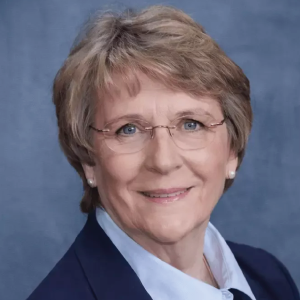 “There was no playbook for building a quality child care program when I entered the early learning field,” recalls Linda Smith, director of the Child Care Trust, a catalyst for designing the future of child care. As a young woman in the early 1970s, she studied child development at the University of Montana and spent a summer working in a tribal Head Start center during the early days of Head Start. Then an unexpected opportunity arose. “My husband took a job at the Northern Cheyenne Reservation, and the tribe asked me to set up a child care program since I was the only person in many miles who had a degree related to the early childhood field. I was only in my twenties and new to the field,” she admits. “Still, the tribe trusted me, so I decided to figure out how to set a program up.”