 Prevention of problems does more than intervention to help families thrive, as Maricela learned 12 years ago on her first job out of college. “I was a social worker for families who were receiving aid from the Nebraska Department of Health and Human Services,” she recalls. “I was supposed to do what it took to get people back to work, whether that meant encouraging them to return to school, get training or sharpen their job interview skills.” Her assistance helped many people find work, but they didn’t last on the job. “Within eight months they were back in my office,” she says, “and I saw that intervention wasn’t the best response to the challenges families faced.”
One of the greatest roadblocks to stable employment was the lack of child care in Lexington, Nebraska, the small city where Maricela went on to work as a home visitor for eight years. “There were only two child care programs in town, so I had trouble finding care for the families I served,” Maricela says. An added problem was the shortage of Spanish-speaking early childhood teachers in her city, where two-thirds of residents are Hispanic. A similar shortage exists throughout Nebraska, as Maricela understood, so she became interested in systems change that could broaden the ranks of Spanish-speaking educators.
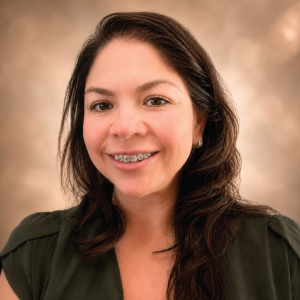
Four years ago, she took on her current role as early learning connection bilingual specialist for the Nebraska Department of Education’s Office of Early Childhood. She supports career and professional development for early educators and is responsible for recruiting bilingual trainers for the department. “I also do an annual needs assessment in Spanish that we distribute to providers,” Maricela says. “I find out what competencies the providers would like and pass on their feedback to the Office of Early Childhood,” she explains. Each year that feedback becomes the basis for a professional development plan that Maricela helps coordinate and put in action.
“The early childhood providers I serve love their profession and want to improve their skills but lack the resources to do it, and that’s where I come in,” Maricela says. “As part of my work, I’m making sure that all the training and courses are in Spanish so the educators can earn their CDA® and do more to make a difference in the lives of Spanish-speaking children and their families.”
Maricela identifies with the struggles that the children and families face because her parents and five siblings came to Anaheim, California, from Mexico when she was five years old. “My father was a farm worker, and we lived in a neighborhood where there were a lot of gang members and drive-by shootings,” she recalls of those frightening early years. Maricela felt safer after her dad found a job at a beef processing plant in Nebraska, and she might have wound up working in the plant, too, if her mother had not been a firm believer in the value of education.
“Despite my mom’s support, I struggled in school,” Maricela says. “I had undiagnosed ADHD, and my teachers considered me to be a disciplinary problem. I remember sitting at the kitchen table and crying because I couldn’t perform as well as the other children in my school. No one considered me college material, but I was able to get my ADHD under control in high school and focus enough to become the first person in my family to go to college,” Maricela says.
Now, looking back, she realizes that the struggles she faced in school had an upside since they made her more empathetic to the roadblocks families and educators face. “In the course of my career, I’ve been in a position where I can show other people that they, too, have the power to succeed. As a home visitor, I saw that early childhood education is a game changer for Hispanic families,” she says, and this observation has been a source of inspiration. Maricela’s efforts to provide the families with Spanish-speaking educators has gone beyond her current work as a bilingual specialist for the state.
“A few years ago, my older sister, a realtor and special advocate for the courts, and I volunteered with Communities for Kids to provide free child care training at the Lexington YMCA,” Maricela recalls. “My mother’s reputation in the community helped us get the program off the ground since she was very service-oriented and known for helping other community members. People remembered my mom as we went around knocking on doors and telling people about the program,” Maricela says. “They decided to trust us and take advantage of the free opportunity we were offering them to learn new skills.”
Some of the women who came were providers who weren’t licensed and often didn’t understand how to navigate the licensing system. Others worked at the beef processing plant and were looking for a better career. Twenty-five women showed up for the training, which included 55 hours of classes on the licensing process and on how to provide high-quality early childhood education. “Out of those 25 women, 10 have continued their journey to become licensed providers and some have also earned their CDA,” Maricela says. These achievements have helped boost their programs’ standing in Nebraska’s quality rating and improvement system, while making a dent in Lexington’s child care shortage.
“That’s the type of community work I love,” Maricela says, and Lexington is just one of the communities she reaches across the state. Maricela also plays a key role in organizing the annual Growing Together Childcare Educators Conference in Grand Island, a very rural part of Nebraska. The event fosters collaboration and a stronger sense of community among educators who are dedicated to providing the best possible care for Nebraska’s children. And their ranks are growing, as Maricela has seen from the increasing success of the conference since its start. “Two years ago, we had only 38 attendees, and this year we had 150 attendees, including staff from both child care centers and family child care programs.”
The goal of the conference is to address challenges in Nebraska’s child care sector by discussing how to recruit more people into the profession, showing how to build a business plan for a child care program and passing on information about best practices in the field. “We also strive to build trust among Spanish-speaking providers, so they’ll seek the state’s assistance in addressing any issues they face,” Maricela says. “We do a needs assessment to put the program together and strategically offer programing that will count toward the CDA.”
The CDA plays a key role in Maricela’s work to improve early learning in Nebraska, and she’s convinced that “no provider should get a license without earning a CDA,” she says. “Educators are building a foundation for people’s lives, and the CDA gives educators the foundational knowledge to get child care right. Earning a CDA is the first step in showing early childhood teachers that they are professionals who make an impact on our society, communities and children,” Maricela points out.
“There are so many studies that show how quality early learning makes a lifelong difference in children’s lives,” Maricela explains. Children who have licensed and credentialed early childhood teachers tend to have better outcomes and fewer problems later on, as she first came to realize during her home visiting days. “That’s why opening access to the CDA is part of my ongoing work toward systems change for our Spanish-speaking early childhood teachers,” Maricela says. “I want to lift the educators up by giving them more resources, skills and support.” The educators, in turn, can lift families up and give children a good start, so they’re less likely to need intervention as adults, Maricela believes. “Helping more early educators to earn a CDA is a key piece of prevention.”