Best Practices and Beliefs: Honoring Native American Heritage Month
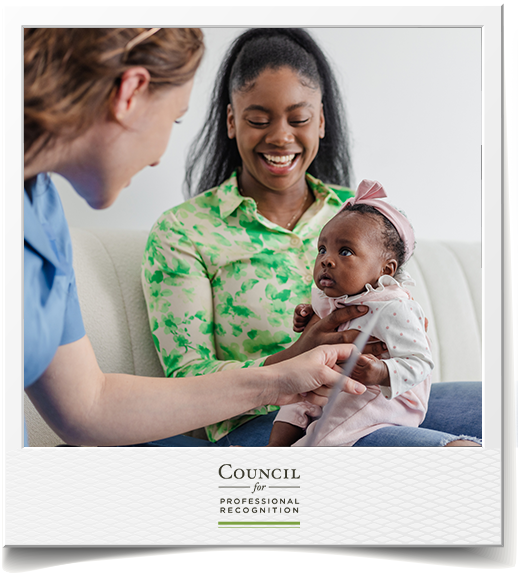
Child-rearing practices in Native American communities have distinct features, as I once observed as a Head Start reviewer. I was visiting an infant-toddler classroom at a tribal program in Alaska, where the staff had swaddled a baby during naptime. It’s a practice I had never seen before, but my CDA® training helped me understand how important it is to honor diverse traditions for raising young learners. This lesson also has value for educators not working in tribal programs. Native American communities exist throughout both urban and rural areas of the nation, so educators need to have both a firm grasp of best practices in early learning and the ability to connect with the Native American communities they serve.
“It’s important to give children the tools they need to succeed,” a Native American mom from North Dakota pointed out in a report from the American Indian College Fund. “It’s also crucial to reinforce our Native values to give our children a better life.” Native families want their culture, language and community traditions to play an integral role in the early learning their children receive, and tribal colleges have responded. Providing competent educators who can connect to Native communities is the goal of the early learning program at Southwestern Indian Polytechnic Institute (SIPI) in Albuquerque, New Mexico, according to Danielle Lansing, an instructor and member of the Navajo tribe, who chatted with the Council a few years ago.
“I teach courses that lead to the CDA®,” Danielle told us, and she valued the way the credential helped students connect theory to practice. “While the students are pursuing their CDA, they’re working in Head Start and center-based programs to earn their experience hours. They seem to do a really good job of translating how the philosophies and theories they’re getting in class apply to real life,” Danielle recalled. “And I think that increases the students’ motivation and sense of purpose to make learning culturally relevant to the Native children they serve.”
Also important were the co-curricular projects that were part of the institute’s early childhood program. “One of the things we have the students do is talk to community leaders who they see as role models in supporting young Native children,” as Danielle explained. “We’ve developed class projects that we implement at our lab school, where some of our CDA students gain their experience hours. The students also get to do observations, talk to teachers at the lab school and participate in the community-based events that we sponsor for families.”
Many community-based events revolve around nature-based learning, a central part of Native American culture, as families pointed out when SIPI asked for their input on the curriculum for its lab school program. “All the families came together and created projects that our children are able to see in their classrooms and on school grounds,” one of the Native moms recalled. “For example, our planting project has been a huge influence on our children, and they get to see parents on certain days of the week pulling weeds and maintaining the garden. The children would run to the fence and give the parents their support. You can see the children’s appreciation for the garden,” she said in gratitude for the chance to contribute to the program.
Educators can also take several other steps to deepen their connections with Native communities and involve them in young learners’ education. For example, they can invite local elders to share their stories and knowledge, attend community events and consult with local organizations about curricula and activities for the children. For early learning programs, embedding Native perspectives is part of building a respectful, culturally responsive practice. That begins with recruiting educators who honor the community’s values, many of which support quality early learning. Native American approaches to raising children also align with play-based learning, listening and storytelling, along with pride in their language and longtime cultural traditions.
“You can’t feel grounded in the present or prepare for the future unless you understand your past,” said Puhala Kamalama, a site coordinator at Keiki Steps in Hawaii, when the Council spoke with her a while ago. Keiki Steps, as Puhala explained, is working to connect families and children to cultural traditions that faded away after Hawaii became a U.S. territory in 1900 and a state in 1959. “So, we integrate Hawaiian culture and language into everything we do,” she said. “For example, in the morning, we do greetings and simple chants to honor our ancestors and greet the day with positive feelings. We also chat about how we can make all children feel valued and look ahead to productive lives in which they feel a sense of duty to their families and community, instead of just thinking about themselves.”
The educators at Keiki Steps are committed to conveying this message, and Puhala guides them by bringing in a cultural specialist for monthly staff development meetings. “She teaches us cultural practices and ways to blend them into our curriculum,” Puhala said. “We also work with programs in Canada and the U.S. that serve Native people. For example, we’ve been active with the University of Arizona, where they’re working to set up a culturally aware program for Native children in schools. We’ve seen that it’s not just in Hawaii that we’re trying to revive our Native culture. We’ve learned that other Native cultures face the same challenge since parents often feel that raising children in the Native culture would impede their progress in school. So, we’re all still learning how to help children look back to better look ahead,” Puhala said.
One of the ways that Keiki Steps is helping its educators move ahead is by supporting them in earning a CDA, part of a broader effort to spread the reach of the CDA in Hawaii. The Council plays a role in this work, and Council staff recently brought together early childhood educators, employers, advocates and stakeholders in Honolulu to discuss the future of the CDA in Hawaii. During the visit, the Council team toured several preschools where there’s been a push for educators to earn a CDA. The team noted that the children appeared happy and that staff members showed professionalism, commitment and pride in holding their CDA credentials.
The CDA made an impact on the Hawaiian educators because a beauty of the credential is its ability to speak to educators no matter where they come from or their cultural group. Educators who earn a CDA are well prepared to serve Native American communities, whether they’re Hawaiian, American Indian or Alaskan, because the CDA teaches educators to support all cultures within an early learning setting by blending best practices with recognition of diverse cultural beliefs. “Learn the rules, traditions, and expectations of families,” as the Council advises in Essentials for Working with Young Children, its textbook for CDA students. “Then use this knowledge to build relationships with families” and give them what that Native mom in North Dakota said she wanted for her child: the tools to succeed and the values to build a better life.
The Council for Professional Recognition is excited to reach the final phase of the transition to remote-proctored CDA® Exams for candidates approved for a monolingual assessment. Since the broader assessment changes announced in February 2026,...
Revised editions of four of the CDA® Competency Standards books will be available in January 2027 in both English and Spanish. If you currently have a CDA® Competency Standards book for your setting, you may...
https://youtube.com/shorts/BN0JTkyBuyA?feature=share Expertise, Made Ready to Open Coming January 2027: Revised CDA® Competency Standards Books The revised CDA® Competency Standards books will feature updated guidance, streamlined information, and enhanced support for completing the CDA® process. The...
In August, the Administration for Children and Families (ACF) proposed significant changes to Head Start governance and staffing requirements. For more than 60 years, Head Start has provided children and families with early learning, child...
A clearer framework for education alignment, approved authorities, and documentation The Council for Professional Recognition has released updated Education and Training Guidelines for the National Child Development Associate® (CDA) Credential™ program. The guidance explains early...
The earliest years of a child’s life establish the foundation for lifelong health, learning, and well-being. From pregnancy through age five, rapid brain development makes this a critical period for nurturing relationships, responsive caregiving, and...
The Council for Professional Recognition is proud to partner with the Council for Adult and Experiential Learning (CAEL) on the inaugural Credit for Prior Learning–Early Childhood Education (CPL-ECE) Cohort, an initiative designed to strengthen pathways...
Did you know the Council for Professional Recognition is a great source for exploring early childhood education trends and finding critical information to support your work? During times of challenge, a key strategy for increasing...
“We can’t just wait for the future we want. We must seize the opportunity to build it,” Susan Gale Perry, Child Care Aware of America CEO said last month on the opening day of “Igniting...
Mackenzie Pelland
Vice President of Product
Mackenzie Pelland serves as Vice President of Product at the Council. In this role, she oversees the Council’s product strategy and portfolio, including credentialing programs, educational publications, professional development resources, and branded merchandise, ensuring offerings are sustainable and responsive to the evolving needs of early childhood educators and the broader early care and education field. Her work focuses on building scalable, user-centered products that strengthen quality and integrity across the Council’s credentialing, educational, and professional learning offerings.
Prior to this role, Mackenzie served as Director of ECE Observation Systems at the Council, where she oversaw the observation portion of the CDA® credentialing assessment process and led the ECE Observation Team. She also worked to support, refine, and strengthen the Professional Development Specialist community to better meet the needs of a diverse CDA® candidate population.
Before joining the Council, Mackenzie was Senior Director of Monitoring and Compliance Systems at Acelero Learning, where she led the development and execution of monitoring systems related to federal grant compliance, child care licensing, health and safety, incident management, and facilities compliance across Head Start programs nationwide. She also previously served as Program Accountability and Policy Implementation Manager at New York City’s Department of Education within the Division of Early Childhood Education.
Mackenzie is recognized as a credentialing specialist by the Institute for Credentialing Excellence. She holds a master’s degree in education policy from Teachers College, Columbia University, a Certificate in Education and Program Evaluation from Georgetown University, and a bachelor’s degree in politics and education from Occidental College.
Elisa Shepherd
Vice President of Strategic Alliances
Elisa Shepherd is the Vice President of Strategic Alliances at the Council, where she leads initiatives to advance the Council’s mission and strategic plan through designing, managing, and executing a comprehensive stakeholder relationship strategy.
With over 25 years of experience in early childhood education (ECE), Elisa has dedicated her career to developing impactful programs, professional development opportunities, and public policies that support working families, young children, and ECE staff. Before joining the Council, Elisa held numerous roles within the childcare industry. Most recently, she served as Associate Vice President at The Learning Experience and as Senior Manager at KinderCare Education, where she influenced government affairs and public policies across 40 states.
Elisa’s commitment to leadership is reflected in her external roles on the Early Care and Education Consortium Board of Directors, the Florida Chamber Foundation Board of Trustees, and as the DEI Caucus Leader for KinderCare Education. She has been recognized as an Emerging Leader in Early Childhood by Childcare Exchange’s Leadership Initiative.
Elisa earned a Bachelor of Science in Psychology with a focus on child development from Pennsylvania State University in State College, PA.
Janie Payne
Chief Administrative Officer (CAO)
Janie Payne is the Chief Administrative Officer (CAO) for the Council for Professional Recognition. Janie is responsible for envisioning, developing, and executing initiatives that strategically manage talent and culture to align people strategies with the overarching business vision of the Council. Janie is responsible for driving organizational excellence through strategic talent practices, orchestrating workforce planning, talent acquisition, performance management as well as a myriad of other Human Resources Programs. She is accountable for driving effectiveness by shaping organizational structure for optimal efficiency. Janie oversees strategies that foster a healthy culture to include embedding diversity, equity, and inclusion into all aspects of the organization.
In Janie’s prior role, she was the Vice President of Administration at Equal Justice Works, where she was responsible for leading human resources, financial operations, facilities management, and information technology. She was also accountable for developing and implementing Equal Justice Works Diversity, Equity, and Inclusion strategy focused on attracting diverse, mission-oriented talent and creating an inclusive and equitable workplace environment. With more than fifteen years of private, federal, and not-for-profit experience, Janie is known for her intuitive skill in administration management, human resources management, designing and leading complex system change, diversity and inclusion, and social justice reform efforts.
Before joining Equal Justice Works, Janie was the Vice President of Human Resources and Chief Diversity Officer for Global Communities, where she was responsible for the design, implementation, and management of integrated HR and diversity strategies. Her work impacted employees in over twenty-two countries. She was responsible for the effective management of different cultural, legal, regulatory, and economic systems for both domestic and international employees. Prior to Global Communities, Janie enjoyed a ten-year career with the federal government. As a member of the Senior Executive Service, she held key strategic human resources positions with multiple cabinet-level agencies and served as an advisor and senior coach to leaders across the federal sector. In these roles, she received recognition from management, industry publications, peers, and staff for driving the creation and execution of programs that created an engaged and productive workforce.
Janie began her career with Verizon Communications (formerly Bell Atlantic), where she held numerous roles of increasing responsibility, where she directed a diversity program that resulted in significant improvement in diversity profile measures. Janie was also a faculty member for the company’s Black Managers Workshop, a training program designed to provide managers of color with the skills needed to overcome barriers to their success that were encountered because of race. She initiated a company-wide effort to establish team-based systems and structures to impact corporate bottom line results which was recognized by the Department of Labor. Janie was one of the first African American women to be featured on the cover of Human Resources Executive magazine.
Janie received her M.A. in Organization Development from American University. She holds numerous professional development certificates in Human Capital Management and Change Management, including a Diversity and Inclusion in Human Resources certificate from Cornell University. She completed the year-long Maryland Equity and Inclusion Leadership Program sponsored by The Schaefer Center for Public Policy and The Maryland Commission on Civil Rights. She is a trained mediator and Certified Professional Coach. She is a graduate of Leadership America, former board chair of the NTL Institute and currently co-steward of the organization’s social justice community of practice, and a member of The Society for Human Resource Management. Additionally, Janie is the Board Chairperson for the Special Education Citizens Advisory Council for Prince Georges County where she is active in developing partnerships that facilitate discussion between parents, families, educators, community leaders, and the PG County school administration to enhance services for students with disabilities which is her passion. She and her husband Randolph reside in Fort Washington Maryland.
Andrew Davis
Chief Operations Officer (COO)
Andrew Davis serves as Chief Operating Officer at the Council. In this role, Andrew oversees the Programs Division, which includes the following operational functions: credentialing, growth and business development, marketing and communications, public policy and advocacy, research, innovation, and customer relations.
Andrew has over 20 years of experience in the early care and education field. Most recently, Andrew served as Senior Vice President of Partnership and Engagement with Acelero Learning and Shine Early Learning, where he led the expansion of state and community-based partnerships to produce more equitable systems of service delivery, improved programmatic quality, and greater outcomes for communities, children and families. Prior to that, he served as Director of Early Learning at Follett School Solutions.
Andrew earned his MBA from the University of Baltimore and Towson University and his bachelor’s degree from the University of Maryland – University College.
Janice Stucke
Chief Financial Officer (CFO)
Janice brings more than 20 years of experience in accounting and strategic financial management, with an extensive background spanning global associations, nonprofits, and technology organizations. She most recently served as CFO/COO for a global association advancing women in commercial real estate. Prior to that, she was the CFO at Achieving the Dream, a national nonprofit dedicated to supporting community college success, and Director of Finance at the Society for Human Resource Management (SHRM) and Controller for two technology companies.
A Maryland-licensed CPA, Janice is deeply engaged in the profession through her service on the AICPA Governing Council and leadership roles with the CFO Leadership Council. In 2025, she was recognized as an AICPA Global Woman to Watch. She holds a Master’s degree in International Affairs & Public Policy from UC San Diego and a B.A. in International Affairs & Economics from The George Washington University, bringing both financial expertise and a global policy perspective to her work.
Janice’s journey is uniquely shaped by global and mission-driven experiences. Before transitioning into accounting, she spent a decade managing refugee programs in the United States and abroad, including roles with the International Rescue Committee and the Maryland Office for Refugees & Asylees. She has also lived and worked internationally in both Japan and Uganda.
Outside of work, Janice is a dedicated endurance athlete who completed a full Ironman triathlon in 2024, bringing the same discipline and determination to her personal pursuits as she does to her professional impact.
CounciLINK is Your Connection
Read our monthly e-newsletter and keep up to date on all Council programs and services, as well as the latest news in the world of early care and education. Subscribe today to stay connected with us. You’ll receive timely information on events, webinars, special promotions, and more.